
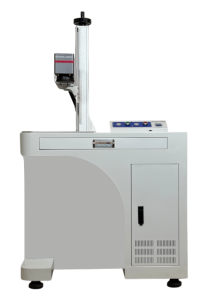
The laser marking technology has transformed industrial production, and the technology provides unmatched precision, speed, and permanence when it comes to traceability and branding.
Starting with the lasers that etch steel with fiber lasers, to the lasers that cut organic matter with CO 2 lasers, these machines are potent instruments that pull the production lines today. This blog is about the necessary safety standards that each laser marking operator needs to learn in order to have a safe and efficient working environment.
1. Optical Safety: How to Safeguard Your Vision
Eye injury is the most serious and immediate risk related to laser marking. A laser beam is not visible as opposed to a physical blade, and this is because the beam moves at the speed of light, and in most instances, it is invisible.
- Know the Wavelength: There are no two lasers. A fiber laser has a wavelength of around 1064 nm (infrared), and a CO2 laser has a wavelength of around 10,600 nm. One kind of safety glasses will not fit the other.
- Measure the Optical Density (OD): The safety glasses will have an OD rating (e.g., OD 6+). This figure gauges the capacity of the lens to block the laser light. The more the OD number, the more the protection.
- Be Wary of Reflections: You do not have to look into the beam and get hurt. Specular reflections (rays that have been reflected off shiny material such as chrome, copper, or polished steel) may be equally hazardous as the main beam.
2. Respiratory Hazards: Fume Extraction and Ventilation
Once a laser burns a material, the material does not simply fade away; it is smoked away, turned into tiny particles, and poisonous gases. Breathing these byproducts may result in short-term effects on the respiratory system and chronic health complications.
- PVC Rule: Polyvinyl Chloride (PVC) and vinyl should not be marked at all, in any case. PVC emits chlorine gas when processed by a laser. This becomes hydrochloric acid when it comes into contact with water (as in your eyes and lungs), and results in gross chemical burns.
- Correct Filtration: A standard shop fan is not likely to be sufficient. The industrial laser markers are also supposed to have a special fume extraction system that has HEPA filters (particulates) and activated carbon filters (odor and gases).
- Material Awareness: various materials contain various toxins. Benzene can be released by marking plastics, and heavy metal dust can be released by marking metals. The Material Safety Data Sheet (MSDS) of the substrate you are handling should always be consulted to get an idea of the respiratory hazards.
3. Fire Prevention Protocols
Laser marking is a technique that focuses the high intensity of heat on a small area. When the beam is moved too slowly or too much power is used, the material does not vaporize but ignites.
- Always Keep an Eye on the Machine: This is the golden rule when using lasers. Fires can start in seconds. When you are using the machine, you should be close enough to the emergency stop button.
- Maintain a Clean Work Environment: The debris, scrap papers, and dust that accumulate inside the machine bed are very flammable. Periodically clean the inside of the marking station with a vacuum cleaner to remove so-called laser fluff and any leftover materials that could trap a spark.
- Know Your Extinguishers: Have a fire extinguisher on hand. CO2 (Carbon Dioxide) extinguishers are commonly used with laser machines, in that they do not produce a corrosive residue capable of damaging delicate optics and electronics, as other standard dry chemical extinguishers do.
4. Mechanical and Electrical Safety
On top of the beam, the laser marking machines are complicated industrial machinery that incorporates high voltages and motion.
- High Voltage Hazards: Laser sources of power often apply high voltage to create a beam. Do not open the electrical cabinet or the laser source housing unless you are a trained technician. Make sure that the machine is well-grounded to avoid electric shock.
- Lockout/Tagout (LOTO): All maintenance procedures must be particular. When doing maintenance, which may be washing the f-theta lens or changing a fitting, lock out the machine and make sure that it is offline.
- Pinch Points: In automated laser marking systems, it is common to have motorized Z-axes, rotary attachments, or conveyors. During operation, keep hands, hair, and loose garments out of the way of these moving parts.
5. Routine Maintenance and Administrative Controls
Procedure and culture are also about safety. Administrative controls are the regulations that determine the usage of the machine.
- Controlled Access: Laser markers (more so Class 4 open systems) must be in a controlled locality. Put signs of danger and lights of lasers in use to warn those who go by.
- Lens Maintenance: A dirty lens is a hazard to safety. When dust is deposited on the focal lens, the dust will become hot, not the material. This may lead to the lens breaking or even breaking down, and the expensive optic will have to be ruined, as well as the release of dangerous debris.
- Training News: Laser technology. Provide all operators with renewed training in new materials, new software settings, and the emergency response plan at least once annually.
Conclusion
The laser marking machine has to operate within a balance of technical expertise and safety consciousness. When you observe the optical hazards and uphold high standards of ventilation and watch very keenly against fire, you are sure that your production line is efficient and accident-free. Safety will not impede productivity; it is its basis.
Hateng Laser provides the most sophisticated marking solutions that can help you secure your workforce and increase accuracy and precision today.
FAQs
1. Is it possible to use standard safety glasses to have protection against lasers during marking?
Nay, ordinary safety glasses cannot stop laser light. The laser safety eyewear you are wearing must be of the required wavelength and optical density (OD) for your machine.
2. What is the material that is the most hazardous to laser marking?
PVC (Polyvinyl Chloride) is very toxic. When it is marked, it releases poisonous chlorine gas that destroys the lungs of humans, as well as corroding the internal workings of the machine.
3. What is the frequency of cleaning the laser lens?
Inspect the lens daily. Wipe it off the minute you notice dust or residual to avoid cracking the optic by laser heat and adverse marking quality.