Metal marking should be clean, fast, and precise. It should also avoid surface damage. That is why many manufacturers choose a 30 watt fiber laser marking machine.
The process may look almost magical at first. Yet it is based on controlled light energy. That makes it useful for fine branding, codes, and serial numbers.
This guide explains the science in simple terms. It also shows what makes a best fiber laser engraver valuable for real production. You will understand how the beam works, why it lasts, and what to check before buying.
How does the laser mark metal without touching it?
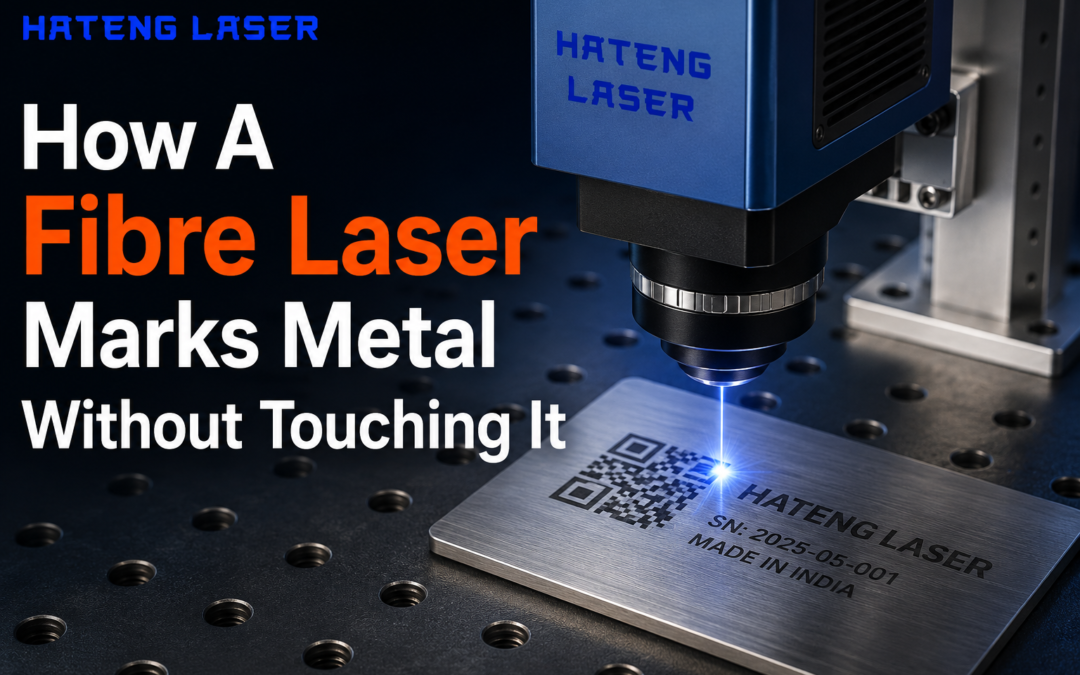
A fibre laser sends intense light through an optical path. That light is then focused onto a tiny point.
At that point, energy rises very quickly. The metal surface reacts almost instantly. This reaction changes the top layer without touching it.
There is no cutting tool involved. There is no stamp pressing the surface. Only light does the work.
That is why a 30 watt fiber laser marking machine feels so efficient. It can make sharp marks with minimal movement. The process is clean and highly controlled.
For many buyers, this is the main appeal of the best fiber laser engraver category. They want accuracy without physical wear.
What happens inside the metal surface?
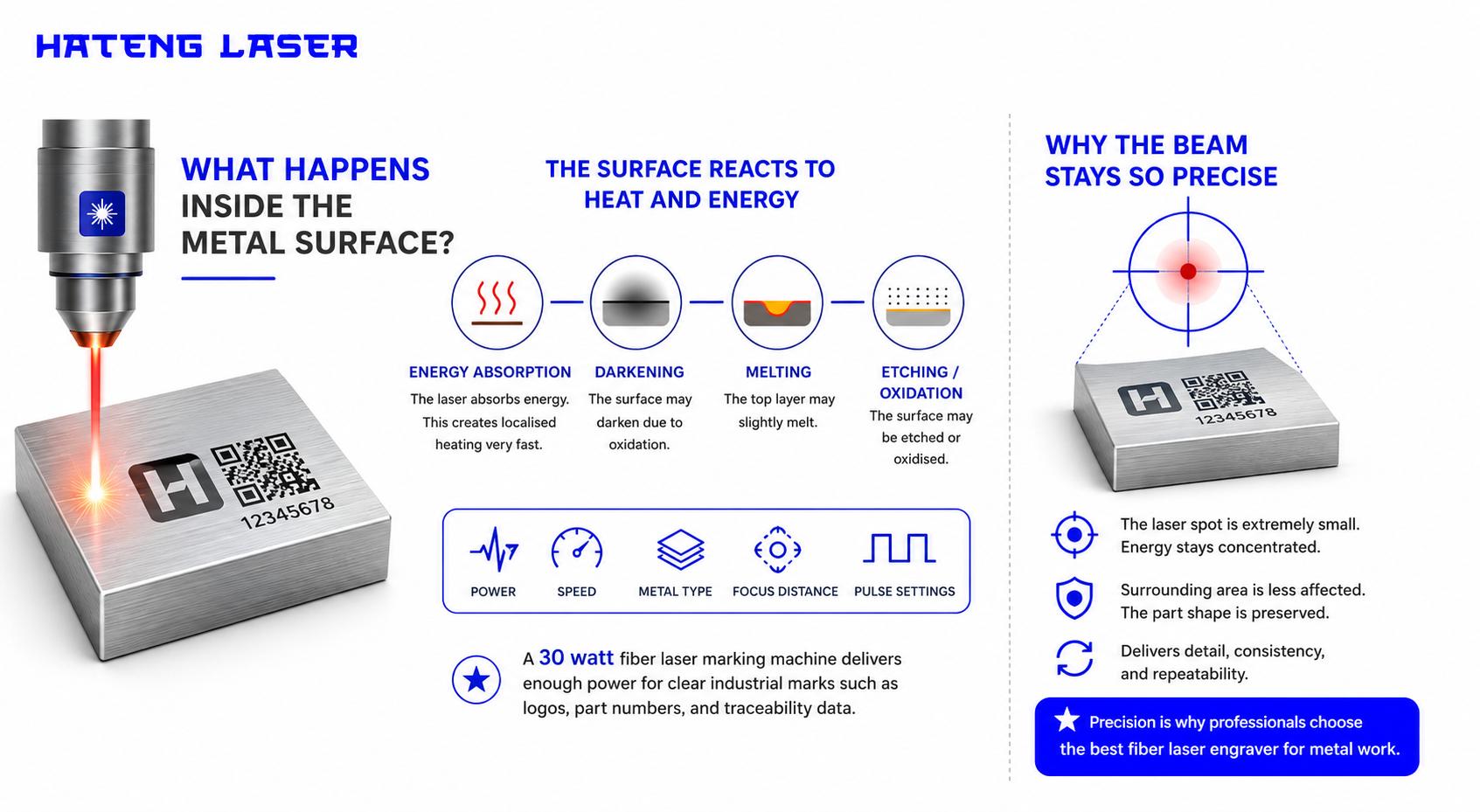
The beam does more than heat the surface. It changes the material in a tiny zone.
The surface reacts to heat and energy
When the laser lands on metal, the top layer absorbs energy. That creates localised heating very fast. The heat is narrow and deeply controlled.
This can cause one of several effects. It may darken the surface. It may slightly melt the top layer. It may create an etched or oxidised mark.
The exact result depends on power, speed, and metal type. It also depends on focus distance and pulse settings.
A 30 watt fiber laser marking machine gives enough power for clear industrial marks. It is often used for logos, part numbers, and traceability data.
Why the beam stays so precise
The laser spot is extremely small. That means the energy stays concentrated. Because the beam is so focused, the surrounding area is less affected. That helps preserve the shape of the part. It also reduces unnecessary heat spread.
This precision is one reason people search for the best fiber laser engraver for metal work. They want detail, consistency, and repeatability.
Why does the mark stay permanent on metal?
A laser mark lasts because the metal itself changes. It is not sitting on top like ink. The surface may oxidise, char, or slightly ablate. Those changes become part of the material layer. That makes the mark hard to remove.
This is useful for industrial use. It helps with compliance, traceability, and brand identity.
It also performs well in demanding environments.
When buyers compare a 30 watt fiber laser marking machine with ink printers, the difference is clear. Laser marks do not smudge or rub off easily. That saves maintenance and rework.
For stainless steel, aluminium, brass, and coated metals, the mark can remain readable for a long time. That is one reason the best fiber laser engraver is often chosen for workshops and production lines.
Which metals can it mark best?
Not every metal reacts in the same way. Some materials mark more easily. Common examples include:
- Stainless steel
- Aluminium
- Brass
- Copper
- Titanium
- Anodised aluminium
- Coated metal parts
Each material behaves differently under the beam. Some produce dark contrast. Others produce light etching. Some need slower settings for better visibility.
A 30 watt fiber laser marking machine is well suited to many of these metals. It is strong enough for clean industrial work. It is also compact enough for many small and medium setups.
For example, a parts supplier in Pune may use it for serial plates. A jewellery workshop in Mumbai may use it for branding on metal pieces. A tools manufacturer in Chennai may use it for batch coding.
That flexibility helps the best fiber laser engraver serve many sectors. It fits both detailed work and routine production.
What should buyers check before choosing one?
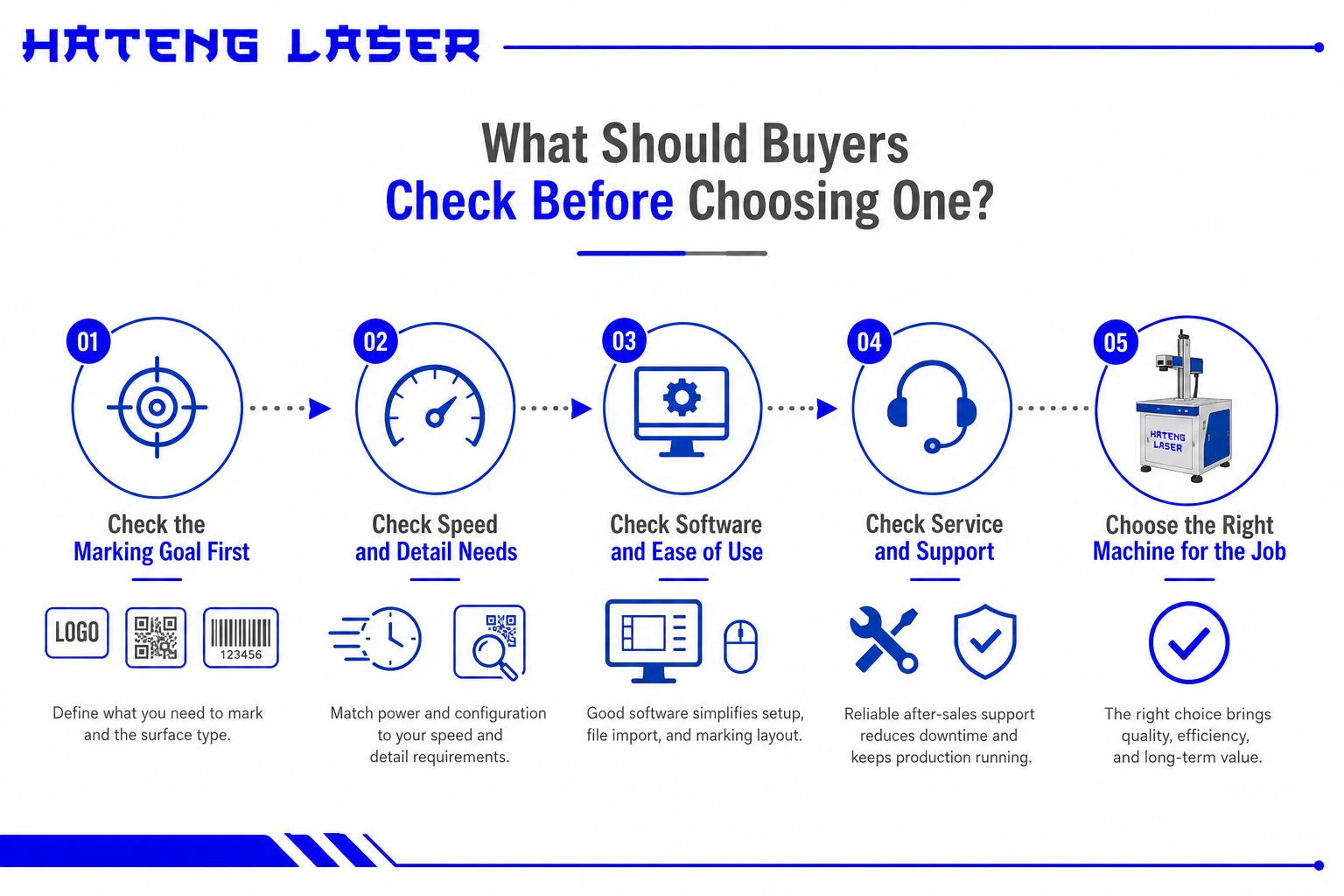
The right machine depends on the job. Not all laser systems work the same way.
Check the marking goal first
Ask what you need to mark. Is it a logo, QR code, or serial number? Is the surface polished, coated, or raw?
These details affect beam settings and result quality. They also affect the choice of lens and software.
Check speed and detail needs
Some users need high-speed batch marking. Others need fine detail on small parts. A 30 watt fiber laser marking machine can suit both, if configured properly.
If you need deep engraving, you may need more power. If you need clean surface marking, 30 watts can be enough. The right choice depends on the application.
Check software and ease of use
Good software makes setup easier. It also helps with file import and marking layout. Operators should be able to work quickly. That saves time on every shift.
Check service and support
After-sales support matters in real production. It reduces downtime and helps with training.
Hateng-Laser is often chosen by buyers who want practical support. That matters when a machine must keep running daily.
What do buyers often ask before ordering?
Can it mark without damaging the part?
Yes, when set correctly. It affects only the surface layer. That makes it ideal for identification and branding.
Is it better than ink printing?
For permanent marks, yes. Ink can fade, smear, or wear off. Laser marks are usually more durable.
Is 30 watts enough for metal?
For many marking jobs, yes. A 30 watt fiber laser marking machine is strong enough for codes, logos, and serial numbers. The right settings matter as much as power.
Why is this system so popular in industry?
Factories value speed and repeatability. They also want clean output. A laser system reduces consumables. It removes the need for ink, stamps, or contact tools. That lowers ongoing effort.
It also supports traceability. That is important in manufacturing, automotive, electronics, and tools. A single part can carry a permanent identity mark.
Many buyers choose the best fiber laser engraver for exactly that reason. They want a tool that works cleanly and reliably.
A 30 watt fiber laser marking machine often sits in the sweet spot. It offers strong marking performance without unnecessary complexity. That makes it a practical choice for many businesses.
Conclusion
A fibre laser marks metal by focusing light energy on the surface. It does not need blades, ink, or contact pressure.
The beam heats a tiny point. That changes the top layer of the metal. The result is a permanent and precise mark.
For many users, a 30 watt fiber laser marking machine offers the right balance of power and control. It suits serial numbers, logos, and industrial codes.
If your goal is reliable metal marking, the best fiber laser engraver should be judged by accuracy, support, and ease of use. Talk to Expert at Hateng-Laser and choose the right system for your application.